
Parsha Inspired Menus - BeHa'alotecha
Food has a central focus in part of this week's parsha, as does whining! Manna was introduced when the Jews first fled Egypt and, using some of dates and timeline we know from the Torah, by the time we get to BeHa'alotecha, it's been over a year of manna. That's a lot of manna. As someone who makes sure that our family has variety in food (even my kids' lunches each day), I can see how this might get tiresome.
There are midrashim that suggest that manna adapted to each person to not make so tiresome
"Rabbi Ami and Rabbi Assi [disagreed]:
One said: They found in the manna the taste of every kind of food, but not the taste of these five [foods mentioned in the verse: cucumbers, melons, et cetera]."
AND
"Rabbi Yosei be-Rabbi Chanina said: The command would reach each and every person in accordance with his faculties.
Do not be amazed by this, for the manna would fall for Israel, [and] each and every person would taste it in accordance with his faculties: the infants in accordance with their faculties, the youths in accordance with their faculties, the adults in accordance with their faculties."
Yet, the text of this week's parsha indicates they are tired of it:
“If only we had meat to eat!
We remember the fish that we used to eat free in Egypt, the cucumbers, the melons, the leeks, the onions, and the garlic. Now our gullets are shriveled. There is nothing at all! Nothing but this manna to look to!”
We also learn in this week's parsha that the manna was not MREs (meals ready to eat). Instead they had to be prepared.
The people would go about and gather it, grind it between millstones or pound it in a mortar, boil it in a pot, and make it into cakes. It tasted like rich cream
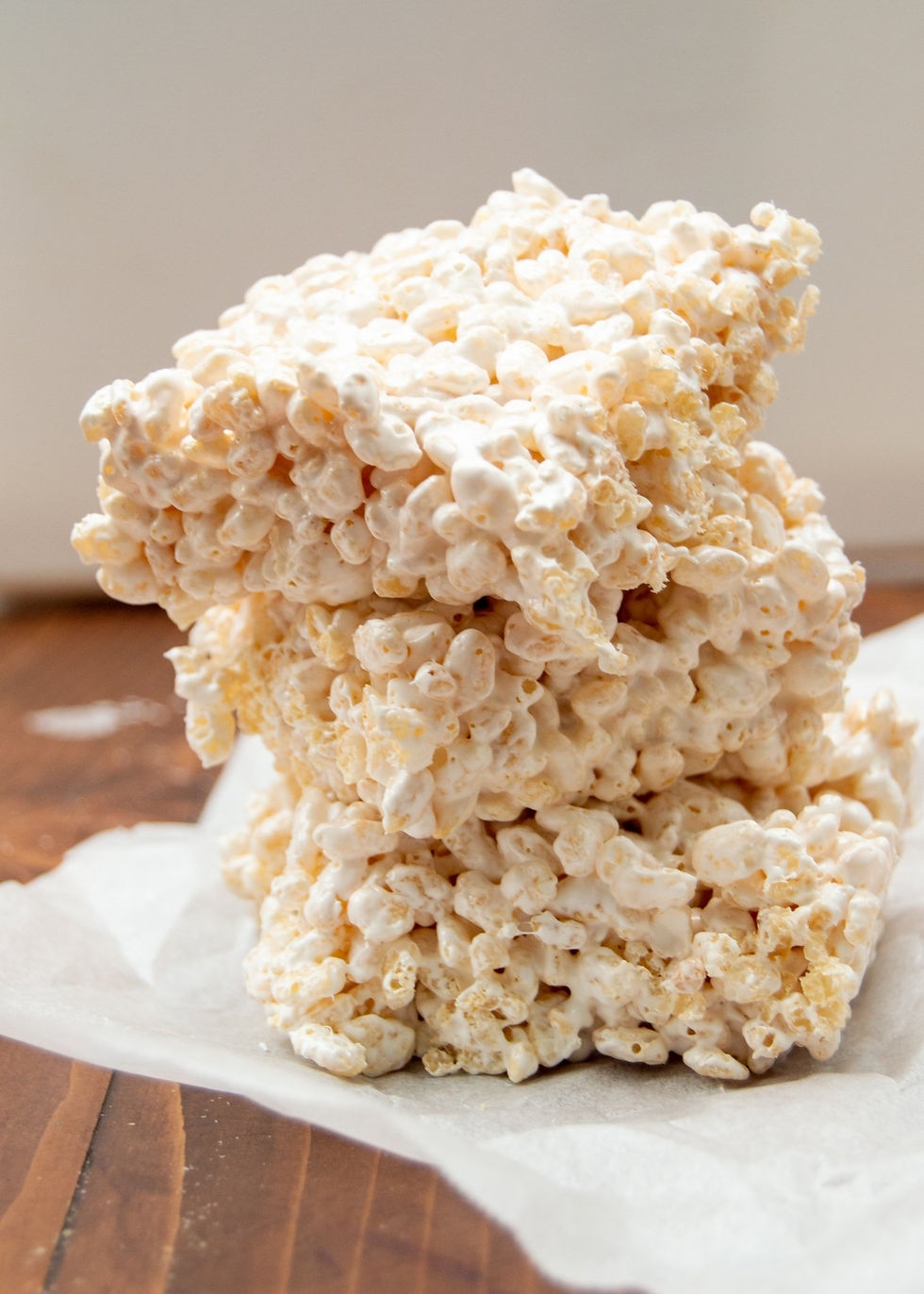
This description reminded my son of rice krispy treats - cakes that taste like cream. This is a very easy dessert and you can make it with marshmellow fluff to make it even easier.
This whining and complaining annoyed and angered God.
Purify yourselves for tomorrow and you shall eat meat, for you have kept whining before GOD and saying, ‘If only we had meat to eat! Indeed, we were better off in Egypt!’ GOD will give you meat and you shall eat. You shall eat not one day, not two, not even five days or ten or twenty, but a whole month, until it comes out of your nostrils and becomes loathsome to you. For you have rejected GOD who is among you, by whining before [God] and saying, ‘Oh, why did we ever leave Egypt!’”
It's an extreme amount of meat coming at the people, so much so that the Israelites will see it as a punishment. And that's not the end of it. God also sends a plague among the people such that some of the people die. Ibn Ezra states "that the ones who had been in the forefront of expressing their lust in order to provoke G’d so that they were punished for their provocation." The Torah also shares that the location of this plague leads to a naming of the location as "Kibroth-
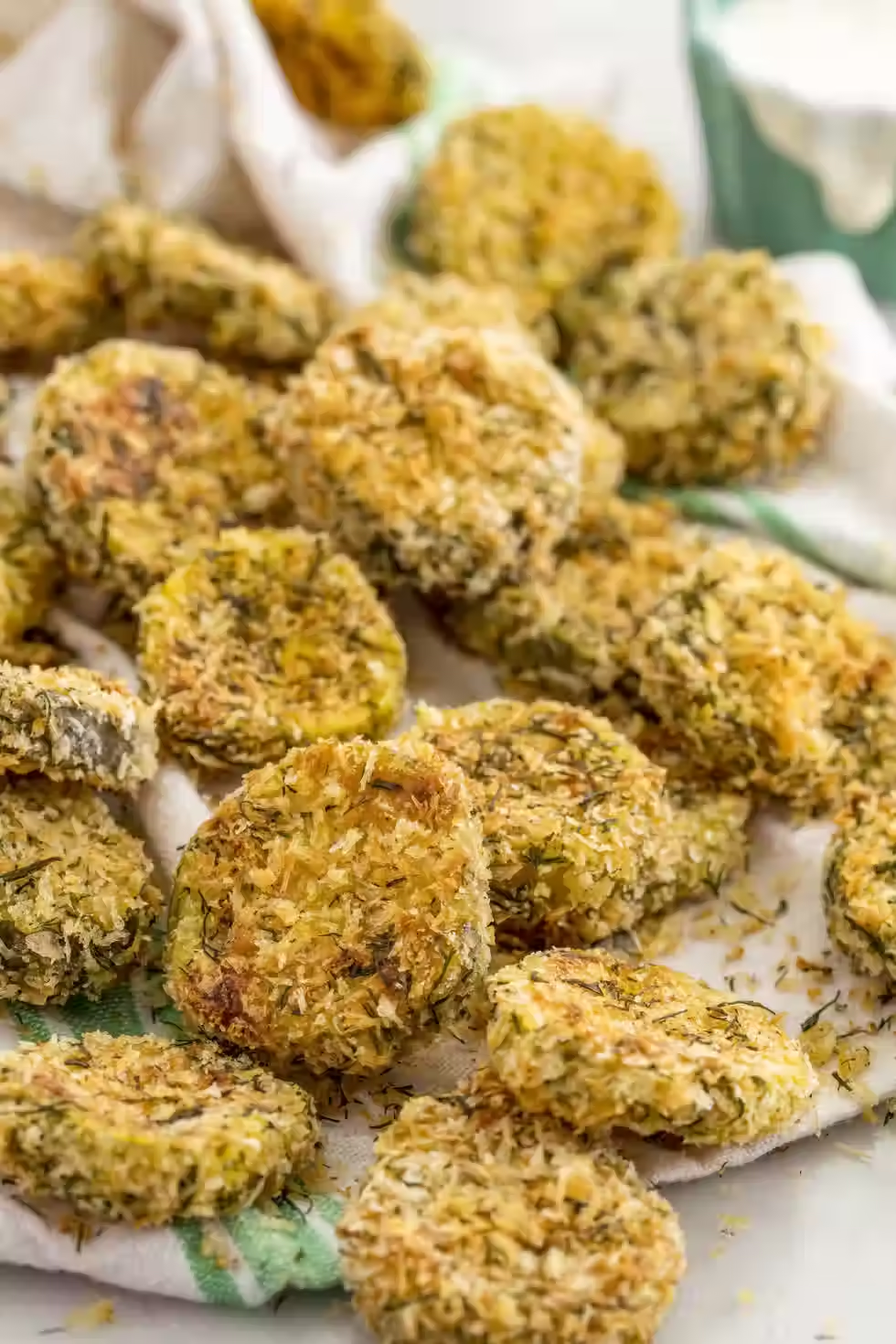
hattaavah, because the people who had the craving were buried there." The translation of "Kibroth-hattaavah" is most often translated as graves of craving, which is such an evocative name and made me focus on this pasuk. I think it highlights the character of this group of Israelites - still ruled by their hunger, thrist, etc, vs. spiritual or intellectual drivers. This is another indication that this generation is not ready to be the transformative group to move from slavery to self determination in Israel. To focus on on "Kibroth-hattaavah' I wanted something that would call to mind the craving, as the first thing that came to mind was pickles, since it's the classic pregnancy craving (though, to be fair, was never something I craved.) But pickles are fun and I found a great option for Shabbat dinner with Oven Fried Pickles.
Shabbat Shalom & B'Tayavon!


Comments